In experimental or anecdotal research discussions, two general approaches are often referenced:
1) Loading phase model
•Duration often described: ~4–6 weeks
•Example range:
 ~2.0–2.5 mg subcutaneously twice weekly
Total weekly exposure:
approximately 4–5 mg/week
Purpose in research context:
•Achieve steady exposure during early study phase.
⸻
2) Maintenance phase model
After loading period:
~2.0–2.5 mg once weekly
(or sometimes every 10–14 days depending on experimental design).
⸻
3) Alternative micro-dosing model (research references)
Some sources describe:
•500–1000 mcg daily
•Gradual titration upward
Weekly exposure typically ends up similar:
~3.5–7 mg/week total.
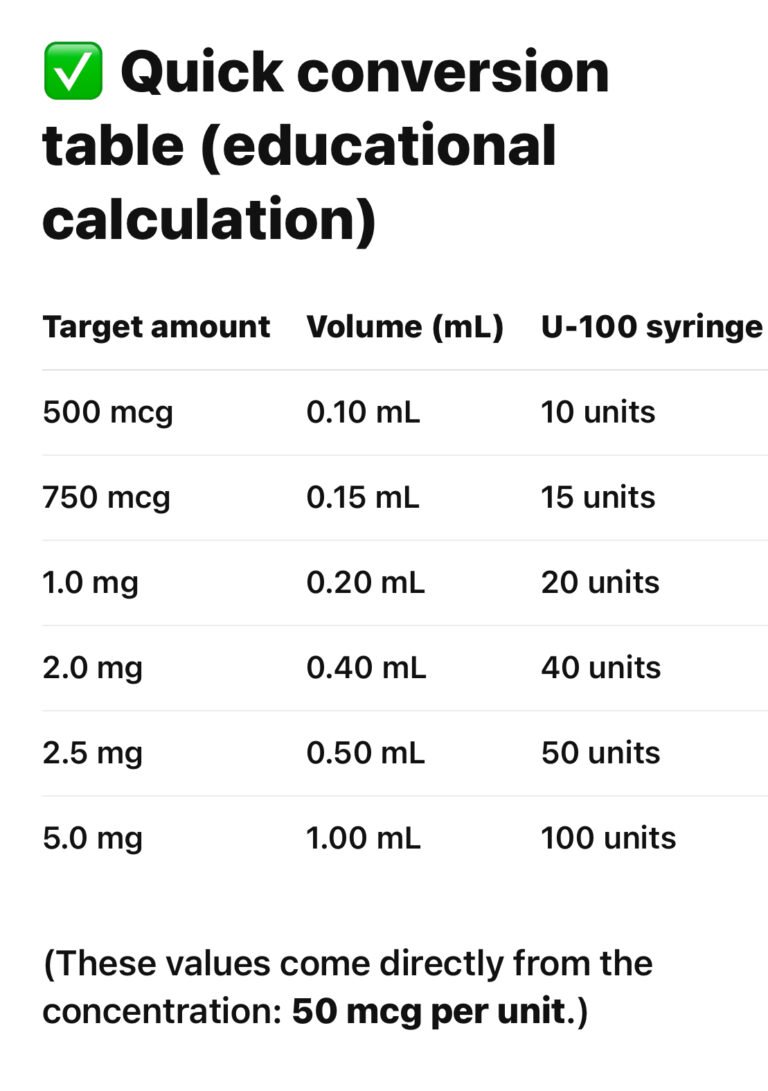
For following example:
If solution = 5 mg/mL:
•2.5 mg dose:
2.5 ÷ 5 = 0.5 mL
0.5 mL = 50 units on U-100 syringe.
Common lab handling references include:
•Use sterile technique during reconstitution.
•Swirl gently rather than shaking.
•Refrigerate after reconstitution.
•Protect from light.
•Many sources mention ~4–6 weeks refrigerated stability (depends on preparation conditions).