GHK-Cu (100mg Vial)
Summary: GHK-Cu Research Protocol (Educational / Non-Human)
Compound overview
- GHK-Cu (glycyl-L-histidyl-L-lysine–
copper) is a naturally occurring copper-binding tripeptide studied for: - Collagen and elastin stimulation
- Wound healing and tissue repair
- Angiogenesis support
- Antioxidant and anti-inflammatory effects
- Human literature reports improved skin thickness, dermal density, and wrinkle reduction; research protocols extrapolate lower, conservative ranges for non-human models.
Reconstitution Reference (Educational)
“Reconstitution” is a fancy word that just means:
Mixing powder with water so it becomes liquid
In research settings:
- Scientists add special clean water (BACwater) to the vial
- The powder slowly melts into the water
- They wait a bit so it mixes evenly
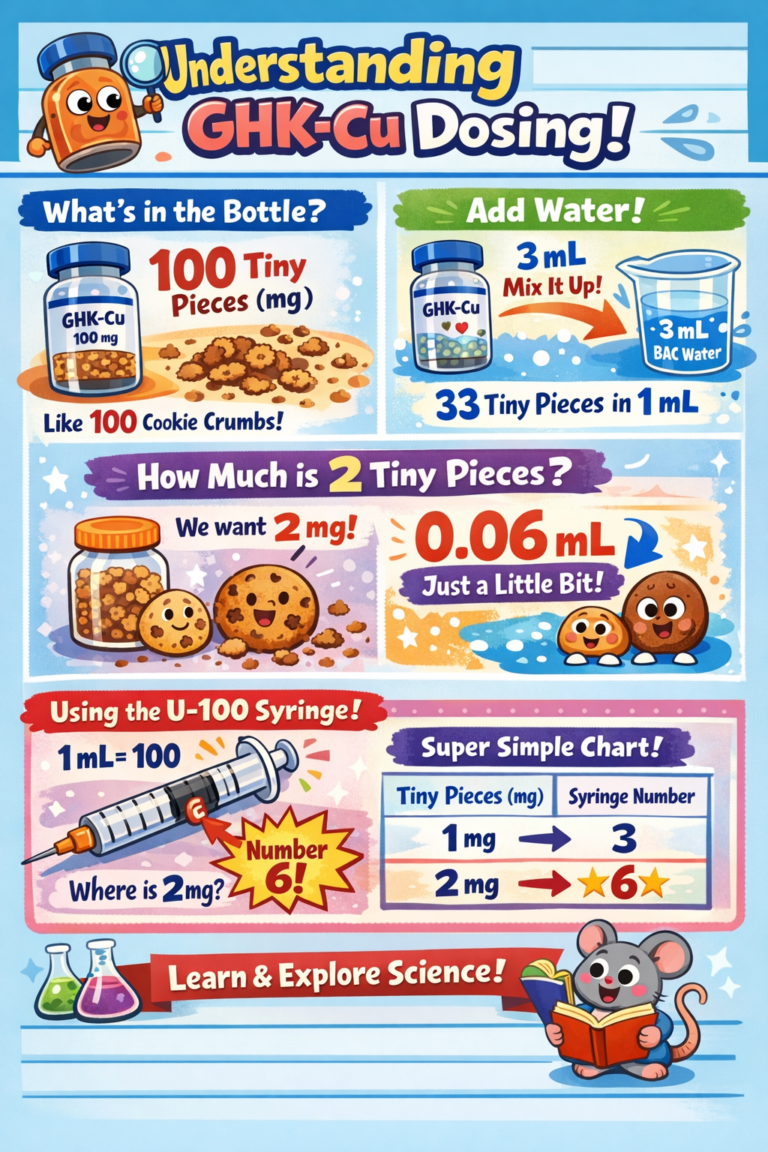
- Vial content: 100 mg GHK-Cu (lyophilized)
- Diluent: 3.0 mL bacteriostatic water (BAC water)
- Resulting concentration:
100 mg ÷ 3.0 mL = ~33.3 mg/mL
With a U-100 insulin syringe:
- 1.0 mL = 100 units
- 3.0 mL total volume = three full syringes to the 100-unit mark
Allow time for full dissolution after reconstitution (commonly ~20 minutes in reference protocols).
Research Dose Range (Preclinical Averages)
- Typical referenced range: 1–2 mg once daily
- Gradual titration over extended study periods (e.g., ~12 weeks) is commonly noted in educational summaries.
- Values are extrapolated from non-human/preclinical data, not clinical recommendations.
Dose Math: 2 mg Target Using U-100 Syringe
Concentration: 33.3 mg/mL
Volume needed for 2 mg:
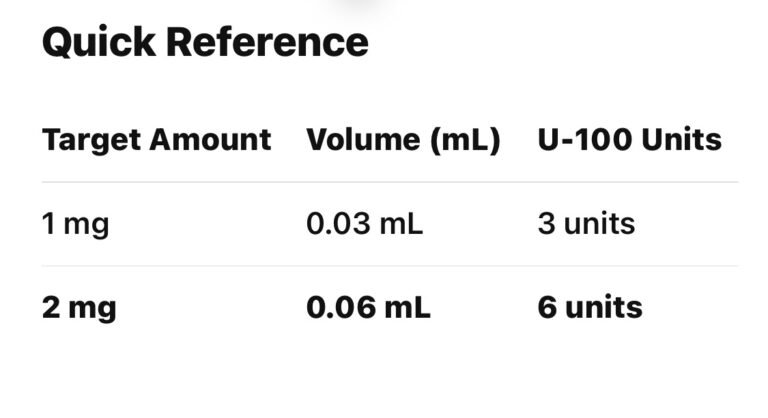
- 2 mg ÷ 33.3 mg/mL ≈ 0.06 mL
U-100 syringe conversion:
- 1.0 mL = 100 units
- 0.06 mL = 6 units
Quick Recap